Search Engine Basics in 2026: Everything Has Changed with AI Search

Most people are convinced they understand the concept of how search engines work. You enter the search query, and you get search results. But in 2026, what is behind the pages you see looks really different from what it did a few years ago.

It’s being driven by artificial intelligence.

The results page you see today is not just a list of links. There are AI-generated summaries, direct answers, and cited sources coming over everything else. 

But still, the businesses winning in search right now, and in the past, have not let go of their foundational search engine basics. Despite everything AI does, the underlying structure and methodology for how a search engine discovers and evaluates your content remains exactly the same.

This guide walks you through the internet search engine basics from scratch, what has changed actually now in 2026, and what impact it will have on your website.

What Are Search Engine Basics?
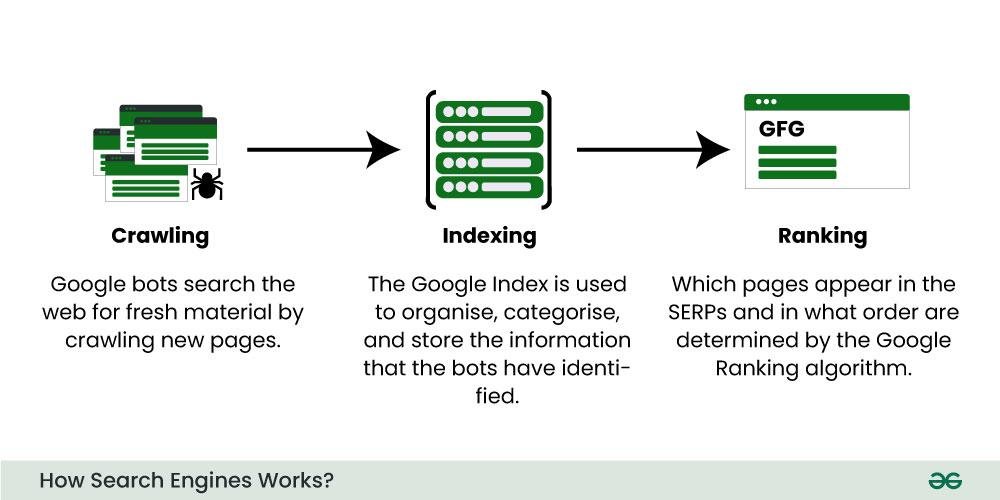
how search engine works

Source:– geeksforgeeks

Simply put, the function of a search engine is to enable people to discover information on the internet. You enter a query, and the search engine scans through trillions of websites to deliver the most appropriate results. 

These three things are the basic functions of a search engine: crawl, index, and rank, and have been since time immemorial, including the AI-powered ones. 

Crawling: This process begins when search engines discover any new content. Crawlers, also known as bots or spiders, are automatic pieces of software that travel around the internet by accessing link after link from one site to another. 

Indexing: In this next phase, any content which is discovered while crawling will be compiled and stored in a huge database which can be rapidly searched and recalled.

Ranking: It’s the last step. The user types the query, the search engine retrieves relevant pages from its index, and orders them according to hundreds of signals – relevance, authority, page quality, and more. 

The search engine basics should not be missed because, without them, any SEO effort that you undertake does not build upon solid grounds. You cannot optimise what you do not know.

Types of Search Engines in 2026

Not all search engines work the same way or serve the same purpose. In 2026, there are three main categories worth knowing.

Traditional Search Engines

These are probably the first search engines people think about. Even now, Google, Bing and Yahoo still process most of the search requests happening across the world. All three of these search engines thoroughly scan the web, compile very large indexes, and deliver ordered sets of results. Google still dominates, though Bing has started catching up due to its tight integration with various Microsoft AI-based software tools.

Classic search engine examples here include Google, Bing, Yahoo, Baidu, and DuckDuckGo.

Vertical or Niche-Specific Search Engines

These index content within a category, such as YouTube for videos, Amazon for products, LinkedIn for professional information, or Zillow for property listings. Each of these could be considered a search engine in its own. 

Quite a lot of those belong to niche search engines. Here are 10 examples of search engine types to give you some perspective: YouTube, Amazon, Pinterest, Booking.com, LinkedIn, Etsy, Indeed, Yelp, Houzz, and Zillow. Working these requires a different set of SEO skills entirely.

AI-Powered Search Engines

Perplexity, Google AI Overviews, ChatGPT Search and Microsoft Copilot bring several pages together, stitch together the content and respond to your query right on the Search Engine Results Page (SERP).

The person doesn’t even have to navigate to your webpage, and you have answered the question in a “zero-click” scenario, as SEO professionals have named it. Your page can have great organic rankings, but since the answer was shown above the fold of your page, the user never visits the site to navigate your content.

How Do Search Engines Work 

Here’s how search engines work in a step-by-step process for the clear sake of knowing what happens when someone types in a query. 

Discovery: A crawler lands on a different URL because of a submission via a sitemap, or they clicked a link to another page. This is why sitemaps and internal linking matter.

Crawling: The bot crawls the page’s content, code, and links. It verifies the headings, text, imagery, and speed of the page. The basics of how search engines actually crawl your site are essential here; failing this initial phase with robots.txt blocking your site or internal dead links is what most people struggle with first.

Indexing: Provided the content is crawlable and adheres to quality criteria, the search engine will add it to its index. Some thin-content pages or pages with no defined subject, or duplicate textual content on some pages may never be indexed or given a poor rank.

Ranking: When someone searches, the engine compares your query against its index of the web and passes it through its algorithm to determine the result. What comes out is an ordered list or, with modern AI search engines, a compiled answer from numerous indexed pages.

Display: The results show up on the page. Usually, in traditional search, this is a ranked list. For AI search, it’s going to be a paragraph, and there are citations underneath it.

The next step depends on the previous one. If your site is not crawlable, then your site is not indexable. If your site is not indexable, then your site is not rankable. The degree of understanding search engine basics will show you what you should be looking at when things start going wrong.

Key Search Engine Ranking Factors in 2026

Although the same ranking factors were important five years ago and still are important today, there are some factors that have been introduced since 2026.

Content quality and depth are the leading contributors. This is because search engines have a preference for the page which properly answers your queries, rather than those full of keywords.

E-E-A-T (Experience, Expertise, Authoritativeness, Trustworthiness) is now at the core of how Google judges content. It counts regardless of the subject matter. 

Backlinks remain incredibly powerful. Search engines perceive an authoritative link that is related to your content as evidence that you’ve produced content worth referring to. Getting a significant number of backlinks needs a strong backlink-building methodology.

Page experience metrics like site speed, mobile use, and the Core Web Vitals impact ranking. If your site is slow to load, it cannot compete.

Structured data is becoming increasingly prevalent because of the boom in AI search. If your content is properly structured, there will be a higher chance that the AI search engines can understand and reference your work in AI-driven responses.

Topic authority is a new and more essential concept. Websites that produce in-depth content are valued over those that publish single articles on obscure topics.

That’s when the Search engine basics come into play. These factors – content, authority, technical health and links – are far from trends. They are the non-negotiables.

Why AI-Built Websites Lack SEO Basics

Many businesses are relying heavily on AI in 2026 to create websites and push content quickly. But speed is not the same as structure.

Often, what AI tools leave behind is all the technical groundwork required by search engines. Pages go live without headings arranged hierarchically, missing or random internal links, non-specific meta-descriptions, and incomplete crawl paths. 

This content could be perfectly readable for a human, but for the search engine bot, on the other hand, this page looks like a mess with zero signals of the core subject of the site, no proper structure and no sign of high authority on the page.

This is precisely the reason why learning search engine basics has become the absolute most crucial requirement in 2026. Even though AI can churn out all your website content much faster, it cannot substitute for clever and effective strategies necessary for developing a website that search engines will actually use to index and list your site above other search results.

SEO Challenges in 2026

This move towards AI-driven search also comes with challenges and issues that didn’t exist before. 

The number one challenge is zero-click results. Google’s AI Overviews now provide answers to many searches even before a user ever scrolls to organic results. Many websites that depend on top-of-the-funnel traffic see a lot of their traffic decline.

Personalised results may make it hard to know where you truly stand. When two people do the exact search from two unique locations, and with varied search histories, it can result in different result pages.

Search is evolving with conversational queries. People no longer type simple keywords but fully formed questions when they search. You need to structure your content in this way, too, instead of merely targeting keywords.

Content saturation is real. With the ability for AI to publish at nearly zero cost and zero time, websites are clogged with so much content. To even stand out, one needs to have real value, a unique perspective, & well built off-page SEO signals.

The Future of Search Engines

There’s one clear direction for Search: the engine does more of the work, and the user does less. You don’t have to type in a well-formed search query and scroll through links; you ask, and the Search engine does the rest.

A big part of this transition is multimodal search. It means people search using an image, a video or a voice input rather than using only text. If you optimise content only for typed queries, you are missing a growing portion of how people search. 

AI agents are going even further. AI tools crawl websites, bring information together from different sources and give you an answer at the end. You don’t have to click or go to any pages; you get one single output.

For website owners, it’s a whole different game in what a successful presence on a search engine actually is. It’s no longer about appearing on page one; it’s now about becoming a source that AI engines know they want to reference when generating their answer.

It takes four things to get there: in-depth, accurate content on a subject; excellent technical foundations so search engines can crawl a page easily; proper schema that helps AI tools read and comprehend your content; and a backlink profile that signals authority.

All businesses willing to invest in guest post services and build out their off-page authority will be set up for a bright future.

FAQs

What are search engine basics?

The basics of a search engine (and SEO fundamentals) can be defined as a sequence of procedures to search for information, collect, analyse, and show the relevant material. Search engines comprise of 3 primary steps: Crawling, Indexing and Ranking

Why are search engine basics important for SEO?

If you do not know the basics of how search engines work, you may be prone to certain technical SEO mistakes which cause your content to disappear from the search index totally.

Is SEO replaced by AI?

No. Although search results have changed through AI, the underlying work of crawling, indexing, and ranking is all still there. In a way, SEO is transforming rather than disappearing. 

What is a search engine and its types?

Search engine: it is a software that retrieves information from the web based on a query a user has typed in the search bar. Generally, there are three categories of search engines: the ‘basic’ or’ general’ ones like Google or Bing, the’ vertical’ or’ special’ ones like Amazon and then the ‘AI’ ones like Perplexity or ChatGPT Search.

Final Word

The way people search has changed significantly. AI is now part of every major search engine, and the results page looks nothing like it did a few years ago. But the search engine basics, crawl, index, and rank, are still running underneath. 

The current top-performing sites in search create thorough, in-depth content on topics, receive good links from credible resources and have the proper technical structure. That’s what had been working all of prior to AI search. 

If ranking in 2026 is a priority for you, stick to the fundamentals. Make sure your site can be crawled. Write content that people and search engines both find useful. Build links that carry real weight.
How Our Client Spent $5,000 on SEO Link Building Services: What Happened When They Outsourced Backlinks

Most businesses don’t waste money on backlinks because they don’t believe in SEO. They waste it because they believe the wrong promises.

Spend five minutes searching for SEO link building services, and you’ll find hundreds of agencies claiming they can deliver hundreds of backlinks, sky-high Domain Authority scores, and first-page rankings. On paper, it all sounds convincing. In practice, the results are rarely that straightforward.

We’ve seen websites with thousands of backlinks struggle to outrank competitors with a fraction of that number. The difference usually isn’t budget, it’s strategy. A handful of relevant, editorially earned links can do more for a website than dozens of placements on sites that exist solely to sell backlinks.

That became obvious when one of our clients came to Backlinks Matters with a $5,000 budget already set aside for link building. They weren’t new to SEO, and they weren’t chasing shortcuts. They had invested in content, cleaned up technical issues, and built a solid website. Yet their rankings had stalled, and the authority needed to compete simply wasn’t there.

Like many businesses, their first instinct was to compare providers based on numbers. 

How many backlinks would they get? 

What Domain Authority would those sites have? 

How quickly could the campaign start? 

Those questions make sense, but they don’t tell you whether the investment will actually move the needle or whether the SEO link building services you’re paying for are built around long-term results rather than backlink volume. 

So instead of focusing on how many links we could build, we started by asking a different question: which links were actually worth building?

Key Takeaways

  • Quality beats quantity, without exception. A handful of placements from relevant, credible sites will consistently outperform a much larger collection of weak ones. The number on a report means very little if the links aren’t doing real work.
  • Strategy is the actual variable. Budget is just a resource. Without a clear objective behind every placement, even a generous budget gets absorbed without producing anything durable. The thinking has to come before the spending.
  • Page selection is half the job. Sending authority to pages that already have ranking potential produces compounding returns. Spreading links across an entire site without prioritization dilutes everything and moves nothing.
  • The timeline is longer than most people want it to be. Quality backlinks don’t expire after a campaign ends. They keep contributing to authority and rankings for months, sometimes years, after they go live. That’s the nature of the investment.
  • The partner matters more than the price. A SEO link building service worth working with understands what you’re actually trying to achieve, builds a strategy around that, and measures success by outcomes, not by how many placements it can deliver in a month.

The Client’s Situation Before Spending $5,000 On SEO Link Building Services

They didn’t need convincing when they reached out. Link building wasn’t a foreign concept to them, they’d already bought into why it mattered. What they hadn’t figured out was why the SEO link building services wasn’t working.

The site had been running for years. Content was going out regularly, the technical foundation was solid, pages were indexed properly, and load times weren’t a concern. On paper, everything looked like it was in order.

But growth had quietly stalled.

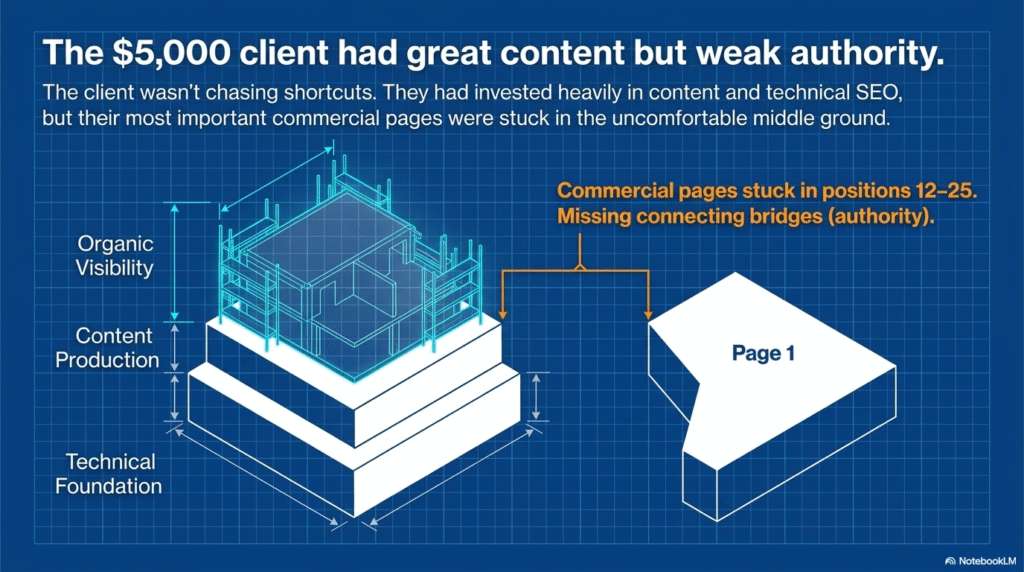
Certain blog posts held their own for longer-tail searches. The pages that actually generated revenue were a different story. Service pages, commercial landing pages, most of them were sitting somewhere between positions 12 and 25. 

Near enough to the first page to feel like a small push would get them there. Far enough away that almost no one was finding them organically.

The reason wasn’t hard to identify once we looked at the competitive landscape. The sites outranking them weren’t doing it with sharper content. 

They had simply accumulated more trust, links from relevant publications, niche sites, and industry resources that had been building over time.

Our client’s backlink profile had a different shape. Links existed, but there wasn’t much logic behind how they’d been built. Some pointed at pages that were already performing reasonably well. Others came from domains with no real connection to the client’s industry. 

The result was a profile that looked active on the surface but wasn’t doing much structural work, something we often see with businesses that rely on a generic link building SEO service rather than a tailored strategy. 

The gap wasn’t volume. It was intent.

A Website That Had Great Content but Weak Authority

What made this project straightforward in one respect was that we didn’t need to fix anything before starting. The content team had already put in the work, useful articles, thorough service pages, topics their audience actually searched for. From a content standpoint, the site was genuinely ready to compete.

The problem was that search engines didn’t have enough external signals to prefer it over more established competitors.

great content but week authority

When two sites offer content of similar quality, Google has to lean on something else to break the tie. Backlinks are still part of how it makes that call. 

Without enough credible, relevant sites pointing to the client’s key pages, climbing for competitive terms wasn’t going to happen through publishing alone. More content would have just meant more pages sitting in the same uncomfortable middle ground.

Why They Decided to Outsource Link Building 

They had tried doing it themselves first. Outreach went out, guest post pitches were sent, a few direct conversations with site owners happened. It wasn’t a complete failure, some things came through, but the pace made it unsustainable.

Relationship-based link building isn’t something you can rush. Identifying the right sites takes time. Getting responses takes longer. Then there’s the content to write, the follow-ups to send, the back-and-forth over placement details. The hours added up faster than their team could absorb them without pulling focus from everything else.

That left a fairly simple decision: keep grinding through a process that was eating resources and moving slowly, or hand it to people who do this specifically.

They went with the second option. The budget was $5,000, and the objective was uncomplicated, build authority where it would actually make a difference, and do it in a way that held up over time rather than producing a short burst of movement that faded, they wanted to avoid cycling through different providers offering affordable SEO link building services without a clear strategy behind the work. 

Where the First Dollars Went (And the Early Mistakes)

The client didn’t throw money at the problem blindly. They approached it the way most reasonable businesses do, researched providers, compared pricing, read through reviews, and made what looked like informed decisions at every step.

Where the First Dollars Went

Early reports gave them reason to feel good about it. New backlinks were showing up, domain authority numbers looked healthy, and things appeared to be moving in the right direction.

Then the question started surfacing in every conversation:

Why weren’t the rankings actually changing?

Once we got into the details of where the budget had gone, the answer became harder to ignore.

Choosing SEO Link Building Service Providers

They’d worked with several providers across the campaign, some focused on guest posting services, others running outreach campaigns, a few offering fixed packages with guaranteed placements. None of those approaches are wrong by nature. The issue was that no one was connecting the dots between them.

Each provider was doing their own thing. Without a shared strategy, backlinks were getting acquired based on availability rather than purpose. The links existed. They just weren’t working toward anything in particular.

The Budget Breakdown

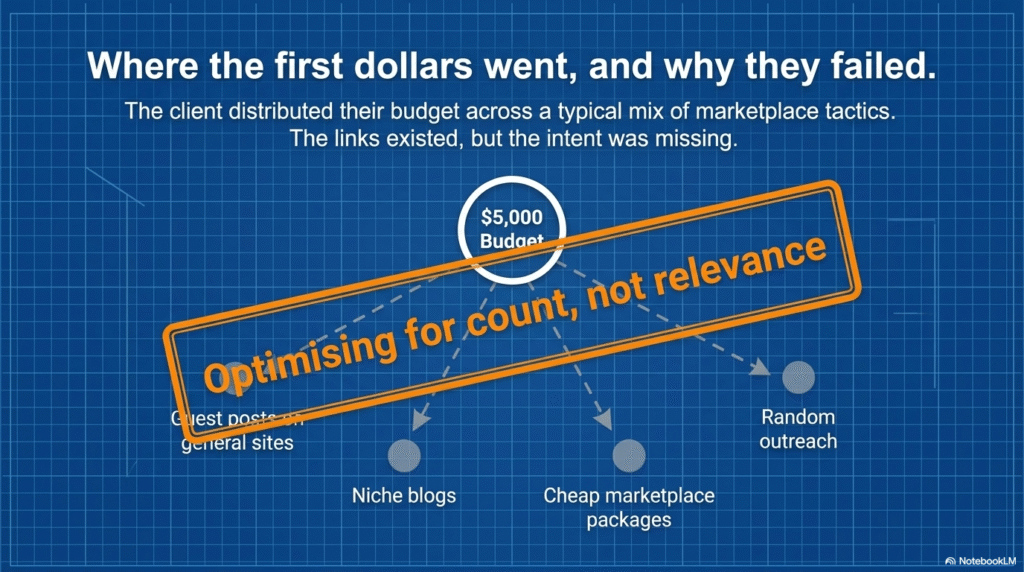
Spend ended up distributed across a fairly typical mix of tactics:

  • Guest posts on general-interest websites
  • A handful of niche blog placements
  • Outreach-based link acquisition
  • Lower-cost packages from link marketplaces

Looked at individually, none of these line items seem unreasonable. Looked at together, they tell a different story. The budget had been spread thin across average opportunities when it should have been concentrated on the placements most capable of actually shifting rankings.

What Wasn’t Working

Three things stood out once we went through everything properly.

  • The campaign had been optimizing for link count rather than link relevance. 
  • A lot of the placements came from sites with acceptable authority scores but no meaningful connection to the client’s industry. 
  • And the pages that needed support most, the commercial pages responsible for driving leads, had been largely overlooked. Authority was landing on pages that didn’t need it while the ones that did stayed exposed.

None of this was permanent damage. But it explained clearly why the return hadn’t materialized.

The one thing working in their favor was that the budget wasn’t gone yet. 

With a more strategic approach to link building and SEO services, there was still plenty of opportunity to turn the campaign around. 

Need a Link Building Strategy That Actually Supports Rankings?

Buying more backlinks isn't always the answer. The right strategy starts with understanding which pages deserve authority, which websites are worth earning links from, and how every placement fits into your long-term SEO goals.

How We Changed the Strategy

Understanding where the money had gone was only half the work. What surprised the client wasn’t our analysis , it was our first recommendation.

We told them to stop buying backlinks.

Not permanently. But until there was a clear reason behind every placement, spending more wasn’t going to fix what the previous spend had gotten wrong. 

That’s a mistake we often see with businesses cycling through different SEO link building services without an overarching strategy 

So before anything else moved forward, we went back to basics , audited the existing profile, mapped out which pages had realistic ranking potential, and figured out where the remaining budget would actually do something useful.

Quality Over Quantity

The most significant shift was pulling focus away from volume entirely.

By that point, the client had already seen firsthand that accumulating links doesn’t automatically translate into rankings. So instead of chasing numbers, we got selective. 

Every placement had to come from a site with genuine relevance to their industry , not just a strong domain authority score, but a real editorial connection to the niche. 

That’s the difference between buying backlinks and investing in a strategic SEO link building service.

SEO link building service

We also raised the bar on content quality. A backlink that exists purely for SEO purposes tends to look like one. 

The placements we went after had to make sense for the publication, serve the reader, and sit naturally within the surrounding content. 

Prioritizing the Right Pages

Deciding where links should point turned out to be just as important as deciding where they came from.

Rather than distributing authority across the site broadly, we ran keyword analysis to find the URLs that were already knocking on the door of page one , pages sitting in that frustrating range where a meaningful push could actually get them somewhere. Those became the primary targets.

Commercial landing pages led the priority list. A small set of supporting resources came next, chosen specifically because they reinforced the internal linking structure around those core pages.

The result was a much tighter campaign. Every link had a destination. Every destination had a reason.

Building Links That Actually Made Sense

The biggest change was in how we evaluated opportunities before saying yes to them.

Domain authority stopped being the first question we asked. Instead, the filter looked more like this:

  • Does this site have a genuine connection to the client’s industry?
  • Is the content it publishes original and worth reading?
  • Would this placement look reasonable to someone who had never heard of SEO?
  • Is this a site worth being associated with on its own merits?

That set of questions ruled out a lot of options , and that was exactly the point.

By the end of the campaign, the total link count was lower than what the client had originally anticipated. But what they had was a profile that made sense, with placements that were relevant, credible, and far better positioned to compound in value over time. That’s exactly what businesses should expect from professional link building and SEO services, rather than simply looking for the most affordable SEO link building services available. 

That’s when the shape of the campaign really changed. The metric we were working toward stopped being links acquired and became something harder to game: authority actually earned.

What Happened After 90 Days?

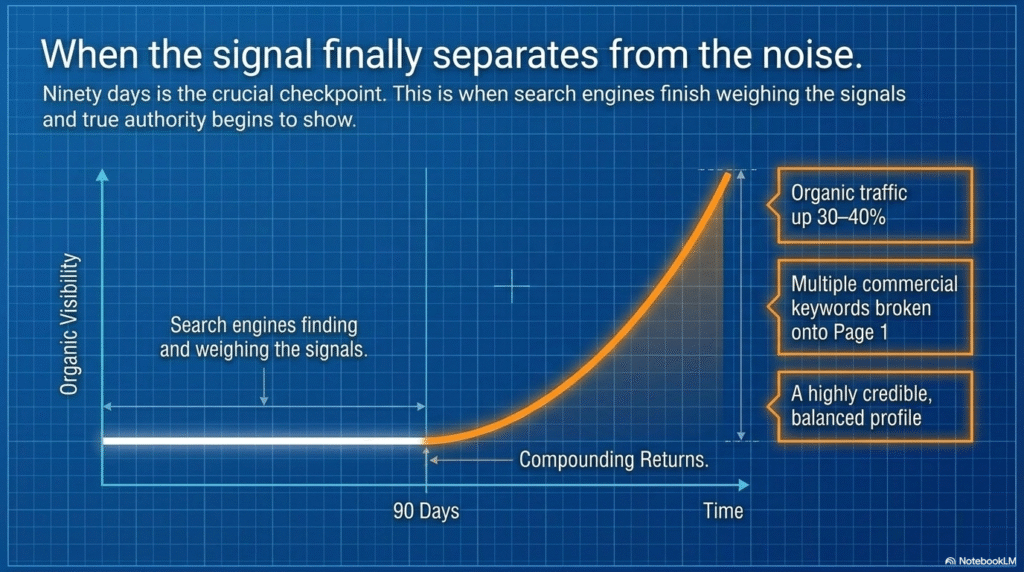
From the start, we were upfront about one thing: even the best SEO link building services don’t produce results the moment links go live. Search engines need time to find them, weigh them, and factor them into how a site gets evaluated. Expecting visible movement in the first few weeks sets up the wrong benchmark entirely.

So ninety days was always the first real checkpoint, not because the campaign would be finished, but because that’s roughly when the signal starts separating from the noise.

seo link building services

Several of the priority keywords had reached the first page. Others had moved meaningfully closer without quite getting there yet. Organic traffic was climbing steadily, and the pages that had received strategic link support were consistently outperforming the ones that hadn’t been part of the campaign.

Against where the site had started, the movement looked like this:

  • Organic traffic up roughly 30–40%
  • Multiple commercial keywords breaking onto page one
  • Broader visibility across related search terms
  • A backlink profile that was more balanced and credible than before
  • Stronger authority on the landing pages that drove most of the business value

But the result that mattered most wasn’t something a dashboard could capture cleanly.

seo tools for digital agencies

New content started performing faster.

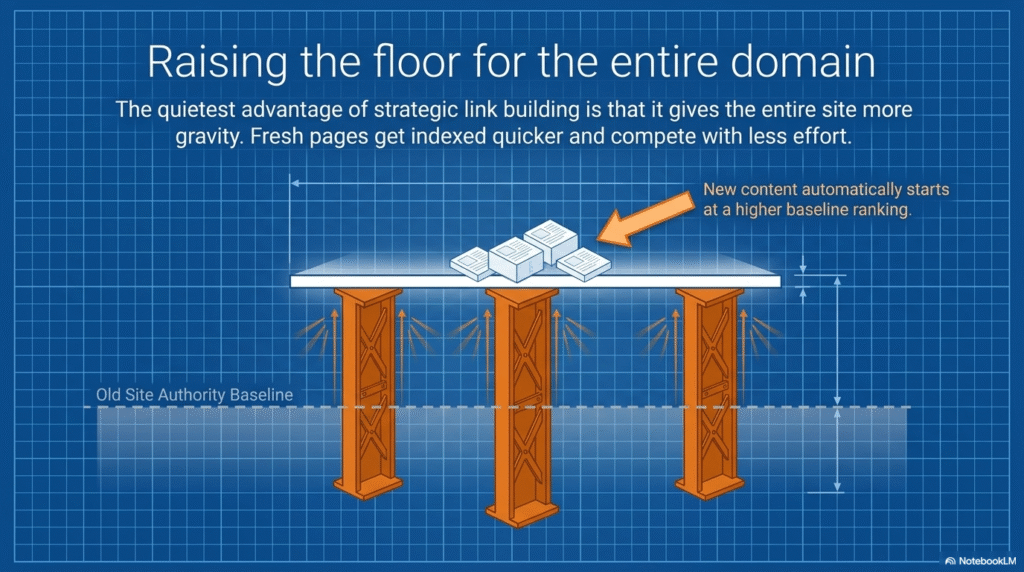
With more domain authority behind the site, fresh pages were getting indexed quicker, picking up visibility sooner, and competing with less effort than they’d needed before. That’s one of the quieter advantages of building links properly, the benefit doesn’t stay contained to the pages you targeted. It raises the floor for everything else the site publishes.

The campaign also confirmed something we come back to often with clients: link building doesn’t work well as a standalone exercise. The gains here came partly from the links themselves, but also from the fact that they were landing on well-structured pages with content worth ranking. Each element reinforced the others.

Looking back, the traffic increase and the ranking improvements were meaningful. But the more durable win was that the client walked away with something to build on, a backlink profile with integrity, a clearer strategy, and a site that was genuinely better positioned than it had been when we started.

That tends to outlast any individual campaign result.

Want Backlinks That Keep Delivering Long After They're Published?

The best backlinks don't just bump rankings for a month—they build the kind of authority that compounds over time. A well-placed link today can still be generating organic growth a year from now.

Which Backlinks Actually Delivered ROI?

Not every link pulled equal weight, and that gap turned out to be one of the more instructive parts of the whole campaign.

The placements that consistently moved the needle shared a recognizable pattern. They came from sites with a genuine connection to the client’s niche. They were published on blogs with real editorial standards, places that actually cared what went on their pages. And they pointed to URLs that already had the underlying potential to rank; they just needed something behind them.

The links that didn’t perform were just as predictable in hindsight. Generic guest posts on broad-topic sites, low-cost packages, placements from domains with no relevance to the industry, these added to the count without adding to the campaign. Rankings didn’t respond to them. Traffic didn’t either.

The lesson isn’t complicated: a small number of well-chosen backlinks will almost always do more than a large number of forgettable ones. Always invest in a professional link building SEO service, the quality of the placements will always matter more than the quantity. 

Should You Outsource SEO Link Building Services?

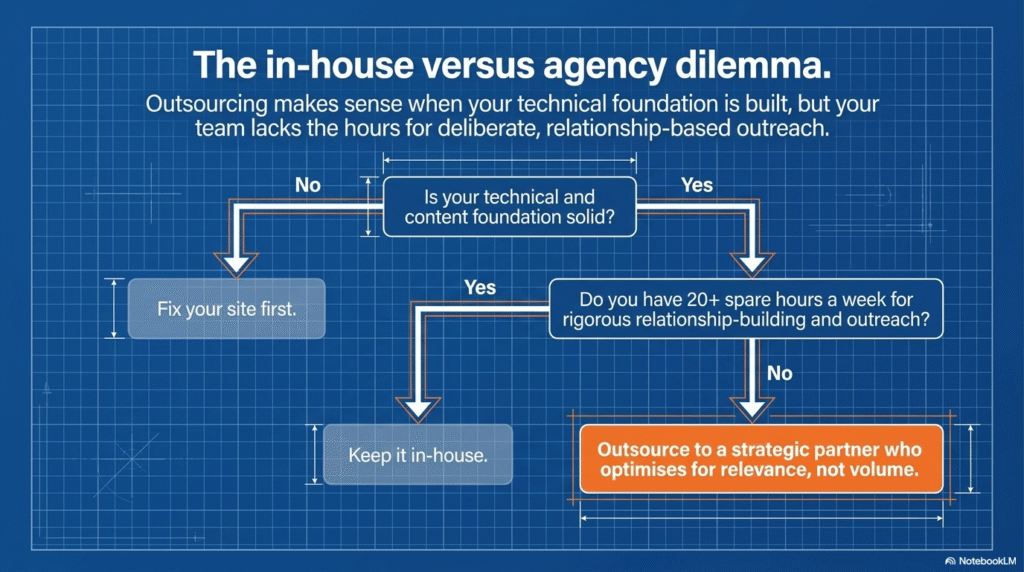
Outsourcing backlinks building starts making sense when the content foundation is already there but the authority to compete for meaningful keywords isn’t. 

Building links properly in-house requires time, consistent outreach, and relationships that take months to develop, most marketing teams don’t have spare capacity for that, and pulling focus from other priorities usually costs more than it saves.

The more important question isn’t whether to outsource. It’s who you hand it to.

in house seo link building agency

What separated the work we did on this campaign wasn’t link volume. It was the process that determined which links were worth pursuing in the first place, keyword analysis before outreach, deliberate page prioritization, and a genuine filter for niche relevance rather than just domain metrics. 

No fixed packages, no chasing numbers for their own sake. Just a clear line between what would build lasting authority and what would only look good in a report.

If you’re evaluating link building and SEO services, the questions worth asking are straightforward: 

  • How does the strategy connect to your actual business goals? 
  • How are individual placements chosen? 
  • Does quality have a real ceiling, or is volume still the primary metric? 

The answers to those questions tend to predict fairly accurately whether the investment holds up over time.

Conclusion

Was the $5,000 worth it?

It was, but not for the reason most people would assume.

It wasn’t the volume of links acquired that made the difference. What turned the campaign around was a shift in thinking: away from link building as a numbers exercise and toward link building as a deliberate, long-term component of SEO.

The results weren’t overnight. Rankings didn’t double in a week, and traffic didn’t spike dramatically in the first month. What happened instead was steadier and more useful, stronger authority on the pages that mattered, better visibility for competitive keywords, and a backlink profile that was actually built to hold up rather than just look good at the end of a reporting period.

The lesson for anyone weighing a similar investment is simple enough. Don’t open the conversation by asking how many backlinks you’ll get. Ask whether they’ll be relevant. Ask whether the strategy connects to real business goals. Ask whether the team you’re working with is optimizing for your long-term growth or just filling a package quota.

A well-directed budget can accomplish more than a much larger one spent without intention. The inverse is also true, the wrong approach can quietly consume serious money without leaving anything behind worth keeping.

At Backlinks Matters, every campaign starts with that distinction in mind. The research comes first, then the targeting, then the outreach, in that order, every time. Because the point was never to build more links than the competition.

It was to build the kind of authority that keeps working long after the campaign is finished.

B2B SEO Services: Definitive Guide for Businesses In 2026

How are B2B SEO services different from generic SEO? 

How will it help my business? 

Are you a business owner who has these and many other questions? This article will make it easy for you grasp this concept. 

Don’t worry, we will go one step at a time. 

In simple terms, Business-to-business (B2B) SEO is the process of increasing your website’s visibility by improving the quality and quantity of traffic.  It means to make your website more attractive to increase its visibility. 

Business owners use this technique to attract more organic visitors to their sites. B2B SEO is about finding what the targeted organic audience wants and delivering exactly what they want.

B2B SEO plays a crucial role in the ever-evolving business landscape of 2026. As organisations strive to stay competitive and relevant, effective SEO strategies are important, especially curated for B2B audiences. 

In the article, we will break down what B2B SEO is, how it is different from generic SEO, B2B SEO vs B2C SEO, why B2B SEO services are essential in 2026, and what services they offer.

Let’s Begin…

What are B2B SEO Services?

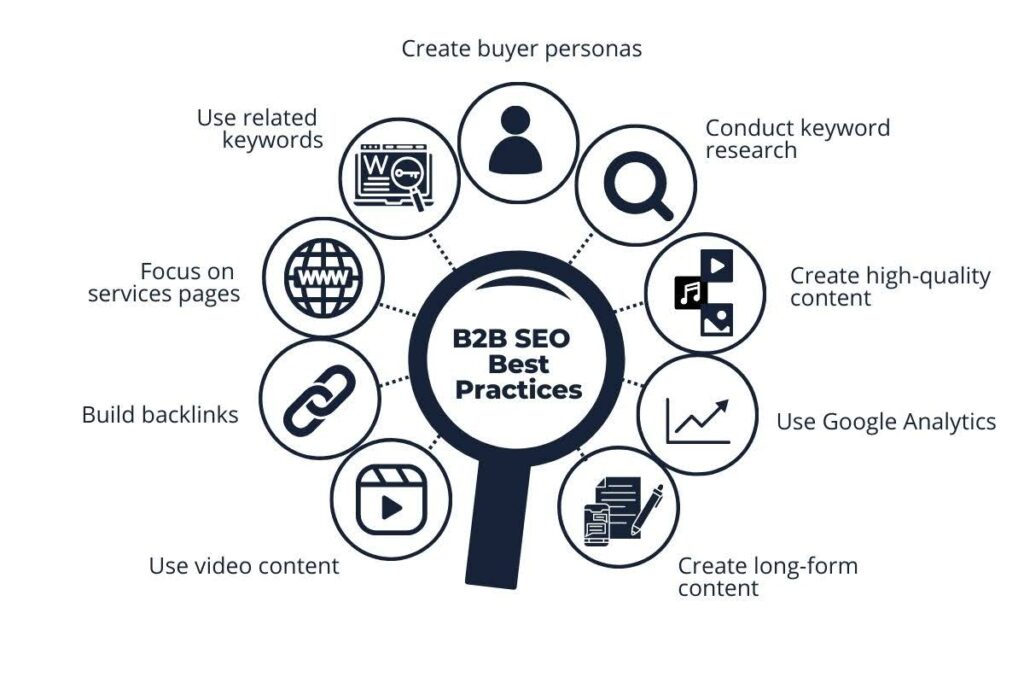
B2B SEO is a strategy where the main objective is, to attract organic search engine traffic and keyword rankings for B2B websites. It is the science of reaching professionals who are interested in your solutions via search engines. 

B2B SEO focuses on – 

  • Keywords that have no volume but high value or search intent 
  • Publishing in-depth and authoritative content about the industry
  • Lead generation is given more importance than impulse purchases
  • Technical SEO is the key

b2b seo

Let us also understand the B2B industries that could benefit from B2B SEO Services. Commonly, industries where customers research extensively before making a purchase decision adopt B2B SEO Services. 

  1. SaaS (Software as a Service) – Companies that offer extensions, services, subscription models, plugins, etc., often require detailed product comparisons or a demo. 
  2. Manufacturers – Manufacturing businesses looking for bulk buyers or corporate clients. 
  3. IT or Technology Services – Companies that offer IT consultations, cybersecurity, or software development solutions. 
  4. Digital Marketing Agencies – These agencies often rely on organic traffic to attract clients for long-term partnerships. 

There is one element common to all the mentioned industries, before making a purchasing decision, the potential customer will run thorough research. And that is exactly where B2B SEO services come into play. 

But why are B2B SEO serviecs are different from B2C SEO services? Let’s unwind that in the next section…

Want To Learn More About Seo? Read Our Guide on SEO Funnels

B2B SEO Services Vs B2C SEO Services – Differences 

SEO is SEO. 

At its core, it is the process of attracting organic traffic to the website that you are aiming to rank over the SERP (Search Engine Results Page). However, marketing activities work differently in the B2B world; there are some tweaks to the said principles. 

Although both B2B and B2C SEO’s main objective is to enhance the search ranking of websites, their goals, execution, strategies, and key performance indicators (KPIs) are different. 

Here are some core differences to understand – 

b2b vs b2c seo

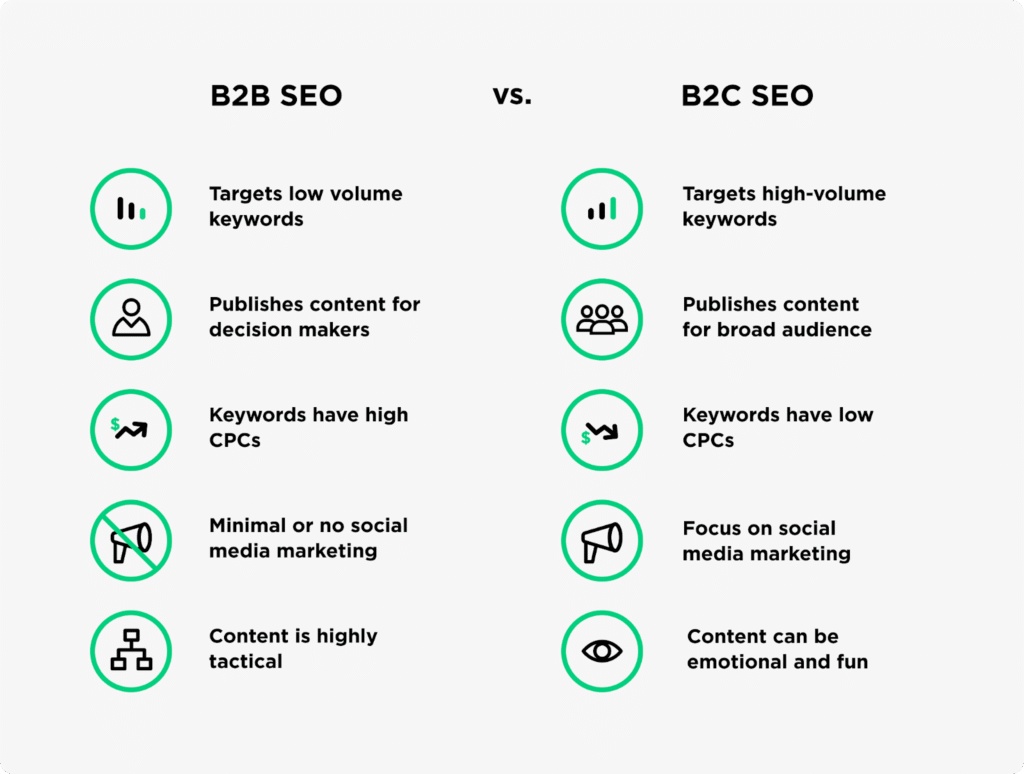
  • Target Audience: B2B SEO targets professionals, bulk buyers, procurement teams, and decision makers. On the other hand, B2C SEO targets consumers’ personal purchase decisions. 

B2B SEO targets low-volume keywords. 

  • Content Depth: B2B SEO focuses on in-depth content such as detailed blogs, comparison articles, demos, and user cases. Meanwhile, B2C SEO solely relies on short-form blogs, engaging product pages, and reviews.

B2B SEO publishes content for decision makers. 

  • Keyword Strategy: B2B SEO primarily focuses on keywords with low search volume but high business value. But B2C SEO focuses on high-search-volume keywords, as well as product-focused keywords.

B2B SEO targets keywords with high CPCs (cost per click). 

  • Promotions: B2B SEO emphasizes no social media promotions, whereas B2C SEO’s main focus is promoting products on social media platforms. 

B2B SEO preaches minimal or no social media promotions. 

  • Main Objective: B2B SEO focuses on lead generation, while the B2C SEO’s objective is direct sales.

B2B SEO publishes tactical content that moves the audience towards lead generation. 

Why Is Having A B2B Seo Agency Essential In 2026?

In 2026, the B2B customers’ buying behaviour has changed. The competition has increased, the customers are more informed, and traditional lead-generation channels are becoming expensive. 

In some aspects, B2B SEO has not changed. We are still spending time generating helpful content for our audience. But one significant change that has taken place: customer queries are being answered by AI. 

This is why B2B SEO Services are just not optional, but essential for consistent growth. 

b2b seo services

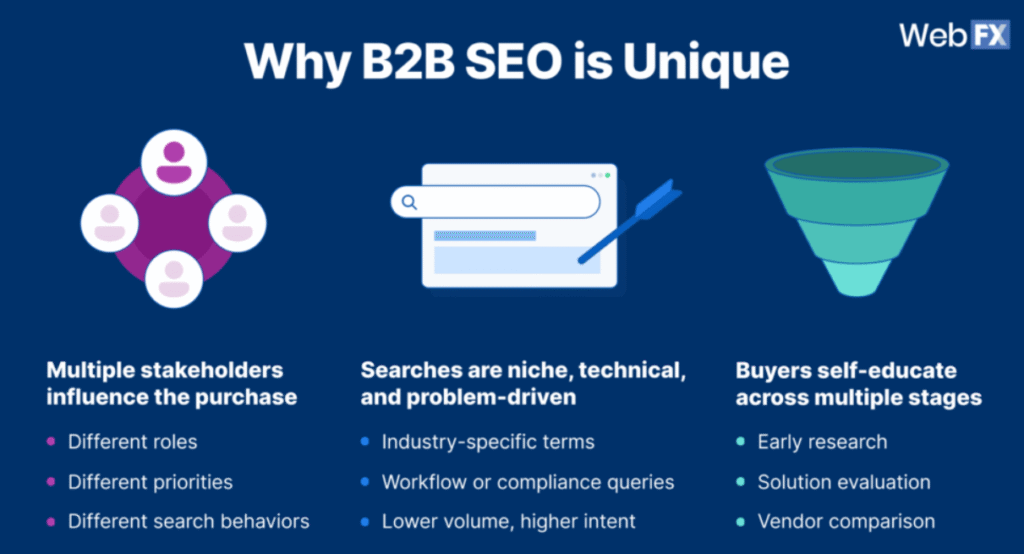
B2B Buyers Start Their Research on Search Engines: Before connecting with a B2B seller or a vendor, B2B buyers usually – 

  • Research about different solutions 
  • Read in-depth articles about the solutions 
  • Compare providers 

If your website doesn’t appear during this research phase, you are losing valuable sales, and you are definitely invisible to high-intent potential buyers. B2B SEO ensures that your website appears early in the decision-making process, not after they have already shortlisted the competitors. 

Cost Efficiency vs Paid Ads: Another issue faced by B2B industries is that; the cost of paid advertisements has increased significantly in 2026, especially for competitive B2B industries.

B2B SEO Services provides – 

  • Long-term organic traffic
  • Eliminates the need for paid advertisements 
  • One well-ranked B2B website can deliver leads for years.

Understanding the Changing Google Algorithms: B2B SEO Services are crucial because Google changes its Algorithm very frequently. It is next to impossible for a B2B business owner to run a business and also keep track of the algorithms. 

Search Engines are now prioritizing – 

  • Expert-level topical content 
  • Trust signals like backlinks
  • Optimize content for Google’s AI Overview summaries 

For B2B businesses looking for ways of consistent growth, B2B SEO is no longer “nice to have”; it is a necessity, a “must-have”. 

What’s Included In B2B SEO Services?

One core objective of B2B SEO Services is to attract high-intent business leads and convert them into profitable sales. Instead of solely focusing on increasing traffic, each activity is planned around authority, search intent, and finally, long-term growth. 

b2b seo services

Here is the complete list of all the activities that are included in B2B SEO Services – 

Keyword Research: B2B SEO starts with analyzing keywords that are used by bulk-buyers or decision makers, not by casual shoppers. These keywords include – 

  1. High-value & Long-tail search terms 
  2. Commercial keyword with high search intent 
  3. Keywords to match different stages of the buyer’s journey

The end goal is getting quality traffic to the website, not just quantity. This ensures that the traffic is conversion-ready. 

Technical SEO: Technical SEO is responsible for ensuring that your website is easy for search engines to rank, understand, and crawl. 

This includes – 

  1. Site Health 
  2. Mobile responsiveness check 
  3. Fixing crawling and indexing issues 
  4. Enhancing internal links 

On-page SEO: Everything you do on your website to increase its visibility is called on-page SEO. There are three types of On-Page SEO:

  1. Crawling is the discovery process by which search engines send out a team of robots to find out the updated content or new content. The database is called CAFFEINE. The trick here to get caught by these crawlers is to keep updating the content on the page or website.
  2. Indexing is the process of storing and organizing the crawled information for future reference.
  3. Ranking is the process that provides the pieces of content that will be the best answer to a searcher’s query, which means that results are ordered from most relevant to Least relevant. At all times be relevant.

Content Creation: This is another important service provided by B2B SEO agencies, especially for long sales cycles. 

The type of content created by B2B SEO agencies – 

  1. Long-form content about the solutions 
  2. Comparision articles 
  3. Real-World use cases 
  4. SEO-optimized blogposts 

Link Building: If your B2B SEO agency has made people naturally talk about or link to your websites, this means they have done half the job. Backlinks play a crucial role here. It is like a web reference to the main web source, website, or web page, giving the viewer the clarity that is often required during the research of any topic. Backlinks are a significant part of any content-creating process.

Tracking & Reporting: Measuring performance is essential for continuous and consistent growth.

This includes – 

  1. Tracking and analyzing keyword performance 
  2. Monitoring conversions and leads
  3. Taking actionable steps based on the insights 

How To Choose The Best Seo Companies For Small Business?

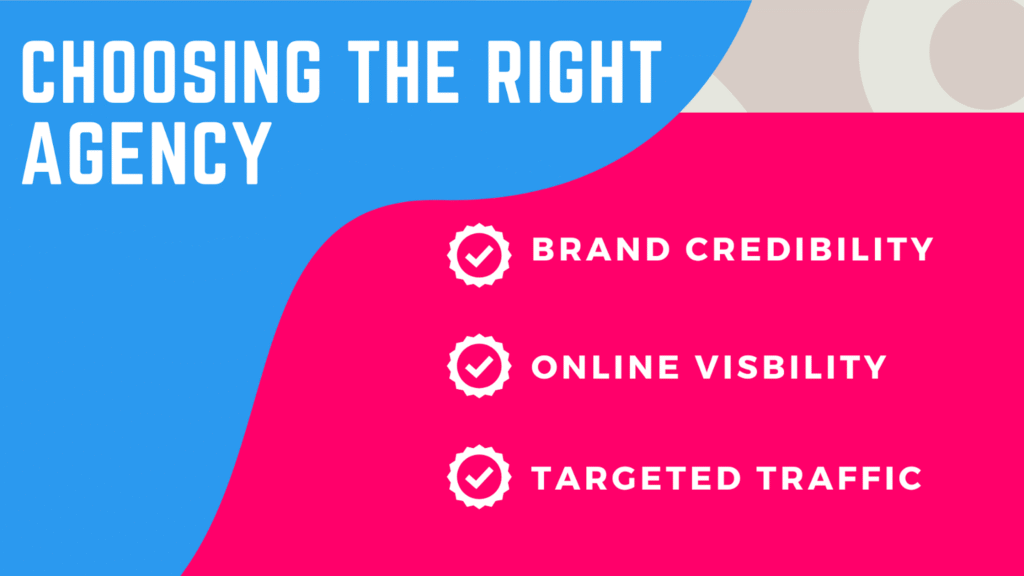
When it comes to boosting your B2B business, it is important to choose the correct B2B SEO Service provider. The right service provider helps you get noticed by the people who are interested in what you have to offer. 

best seo agency

It is important to note that not all SEO agencies understand the B2B market. If you choose the wrong agency, it can result in poor-quality leads and increased traffic. 

These are some essential points to consider – 

1. Experience with B2B SEO

The service provider you choose should understand that B2B SEO is different from B2B SEO. 

They should have experience in working with – 

  • B2B businesses
  • Low-volume and high-value keywords 
  • Long-tail keywords 
  • Curating long-form educational content for decision makers

Tip: You can ask agencies to show case studies of the work they have done for other B2b industries. 

2. Realistic Expectations

SEO takes time, especially for B2B industries. Be aware of agencies that –

  • Guarantees instant lead generation 
  • Promises #1 ranking in 2 days 
  • Avoid discussions regarding challenges or timelines 

Tip: A trustworthy B2B SEO agency will be transparent with the timelines and deliver consistent growth. 

3. Ethical Link Building Activities 

Creating backlinks is essential in B2B SEO, and it should be done ethically. Choose agencies that – 

  • Builds ethical backlinks from reputable websites
  • Uses white-hat SEO. This refers to SEO techniques, best practices, and strategies that abide by the Search Engine rule; its primary focus is to provide value to the audience.
  • Avoids spammy links 

Why Choose Backlinksmatter?

Backlinksmatters is a B2B SEO agency that helps you dominate search results with consistent, data-backed SEO campaigns designed to increase rankings, leads, and revenue. 

From technical white-hat SEO strategies to high-authority backlinks, they look after everything. What will be your job? To convert generated leads and make profitable sales. 

Their track record speaks for itself; they have consistently delivered exceptional results. 

Want to Build Authority Without Chasing Collaborators?

Backlinks Matters focuses on relevant, industry-specific placements that support long-term authority rather than quick wins.

Frequently Asked Questions (FAQs) 

What are the four types of SEO?

The four types of SEO – 

  • On-Page SEO (On-page SEO is everything you do on your website to increase its visibility),
  • Off-Page SEO (it refers to actions taken outside your website to impact rankings on search engine results pages),
  • Technical SEO (enhances the site structure), and 
  • Local SEO (targeting the local audience through Google Business Profiles).

What are 4 types of B2B?

The four types of B2B are producers, resellers, government, and institutions. Understanding these businesses helps B2B SEO agencies build strategies around such industries. 

How important is SEO for B2B?

B2B SEO services play a crucial role in the ever-evolving business landscape of 2026. As organisations strive to stay competitive and relevant, effective SEO strategies are important, especially curated for B2B audiences.